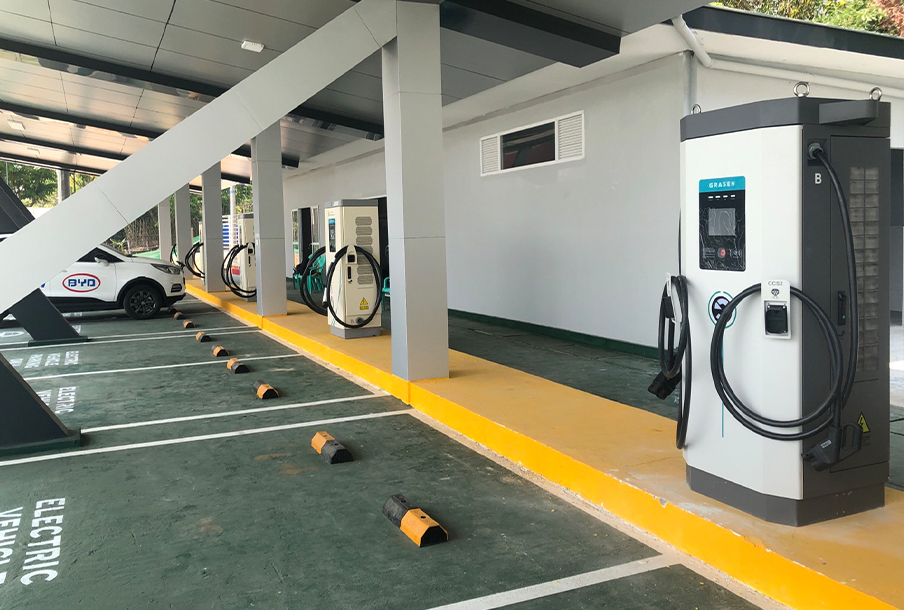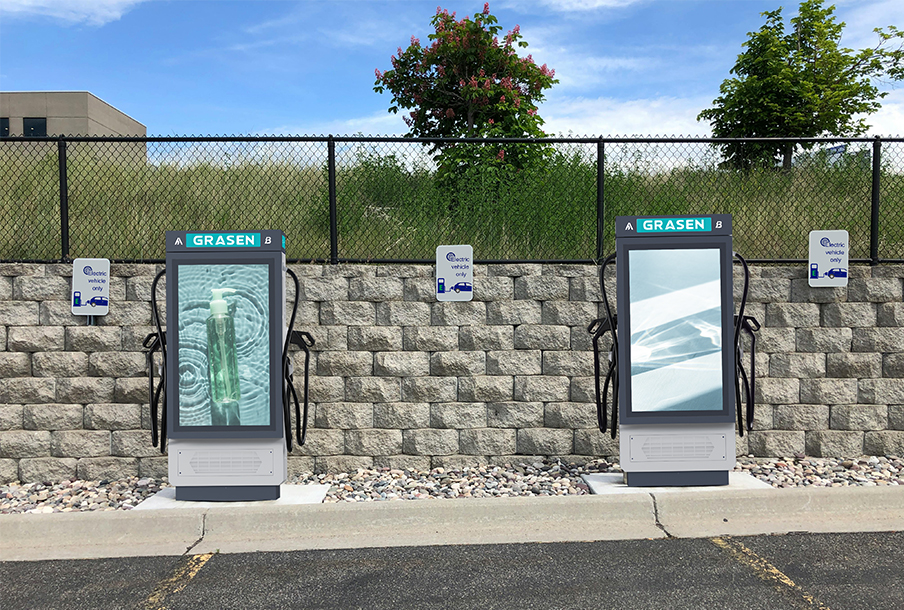



As e-mobility reaches a critical turning point, establishing uniform infrastructure standards has become a top priority for the industry. AFIR establishes the unified standard that governs all charging infrastructure across the European Union, ensuring a consistent experience for every driver, regardless of the brand or border." From this date (2026), all charging point manufacturers and CPOs (charging point operators) from around the world have to comply with AFIR in order to enter the European market.
What is AFIR?
The Alternative Fuels Infrastructure Regulation (AFIR) is a key component of the EU’s "Fit for 55" climate initiative. Unlike previous directives, which allowed for multiple interpretations by different member states, AFIR is a direct and uniform law that will be applied equally for all member states. Its main purpose is to make it possible to use and travel with electric vehicles (EV) as easily and lawfully across borders in all EU countries as it currently is to use and travel with a gasoline vehicle.
Mandatory Requirements under AFIR
Mandatory Electronic Payment Terminals
In 2026, all new public fast chargers (output power ≥ 50 kW) must be equipped with an electronic payment terminal - a payment card reader or NFC contactless payment. The European charging landscape is currently plagued by extreme fragmentation. Drivers are often forced to manage a digital 'wallet' of dozens of different apps or carry a collection of brand-specific RFID cards just to initiate a simple charging session.
AFIR ends these "app islands" by mandating ad-hoc payment—meaning drivers must be able to "tap and charge" with a standard bank card or mobile wallet (like Apple Pay) without being forced to register for a specific membership. Existing fast-charging networks also face a strict retrofitting schedule.
Price Transparency
in order to avoid "price shock," charging networks will now be required to display all charging costs as a price per kWh on each charger before the user begins charging (i.e., there will no longer be any ‘surprise’ charges on the user’s credit card). Previously, users had difficulty estimating how much charging would cost them due to different pricing models being used (by charging session, time, or hidden fees) and charging stations did not display the amount the user would be charged until the charging session ended. All charge rates and other costs will be available to users through the charger’s display or a QR code before the user begins charging.
Road Network Coverage
The AFIR has a "60km rule" prescribed along the Trans-European Transport Network (TEN-T) for the installation of charging hubs every 60km by the year 2026 with a minimum total output capacity of 400kW (inclusive of at least one individual 150kW). Power levels will need to continue to increase in the coming years to ensure that long-distance travel by electric vehicle is viable, even in remote areas, by 2028.
Real-time Data Sharing
All charging points that provide public access must have a digital connection and share their data via National Access Points (NAP's). Each operator has an obligation to provide real-time updates concerning charger availability (available, occupied, out of order) and current pricing for free per use. This allows navigation applications to provide live, accurate information, ending the hassle of reaching a broken or occupied station after traveling.
Technical Hurdles
Now that PCI-DSS compliant payment modules must be integrated within compact chargers, EV charger manufacturers will redesign the physical layout and secure communication between industrial charging controllers and financial gateways, in addition to redesigning the terminals themselves (to be ruggedised). In particular, payment terminals need to be robust against outdoor environments and have secure access points to prevent tampering.
AFIR requires a "high level" of exact data exchange requiring OCPP 2.0.1 as the applicable standard; In addition, implementation of ISO 15118 (Plug and Charge) presents significant challenges to achieve true "Plug-in and Go" technology.
Operational Challenges
Mandatory hardware upgrades and continuous data monitoring have significantly increased upfront investment and ongoing maintenance costs. Since AFIR also limits high roaming fees, operators must now focus on maximizing station turnover and offering value-added services—like retail or lounges—to protect their profit margins.
Meeting the 60km coverage mandate is difficult in areas with weak grid infrastructure. Many CPOs face limited power quotas when trying to install high-power chargers. This is accelerating the adoption of "Solar-Storage-Charging" solutions, using on-site Battery Energy Storage Systems (BESS) to buffer the grid.
Why AFIR Matters?
AFIR creates the "gold standard" for the European charging market, removing the final barriers to cross-border logistics and travel. By legally breaking down proprietary ecosystems, it shifts competition from "land grabbing" to service quality and technical reliability. For the global supply chain, any company that achieves AFIR compliance today is effectively setting the benchmark for the next decade of global EV infrastructure.