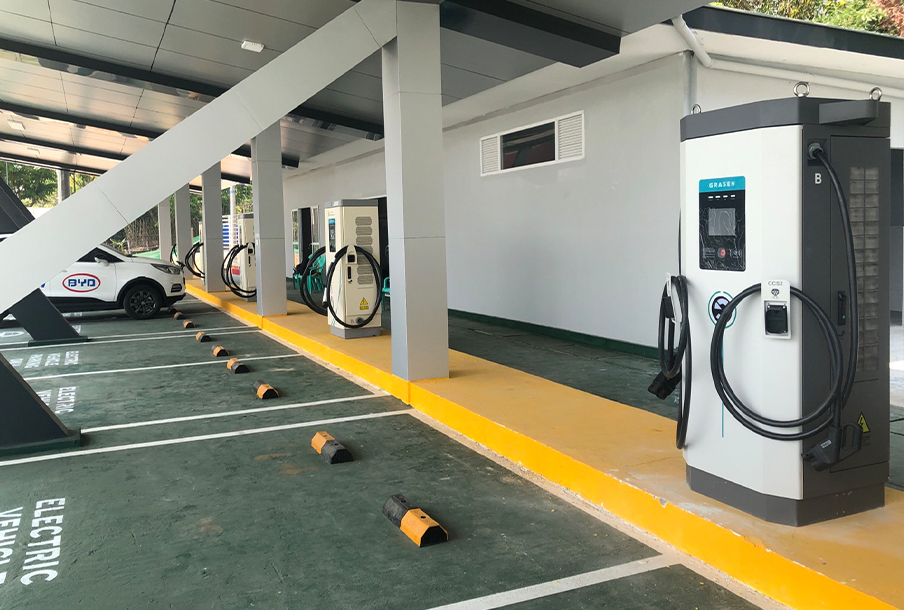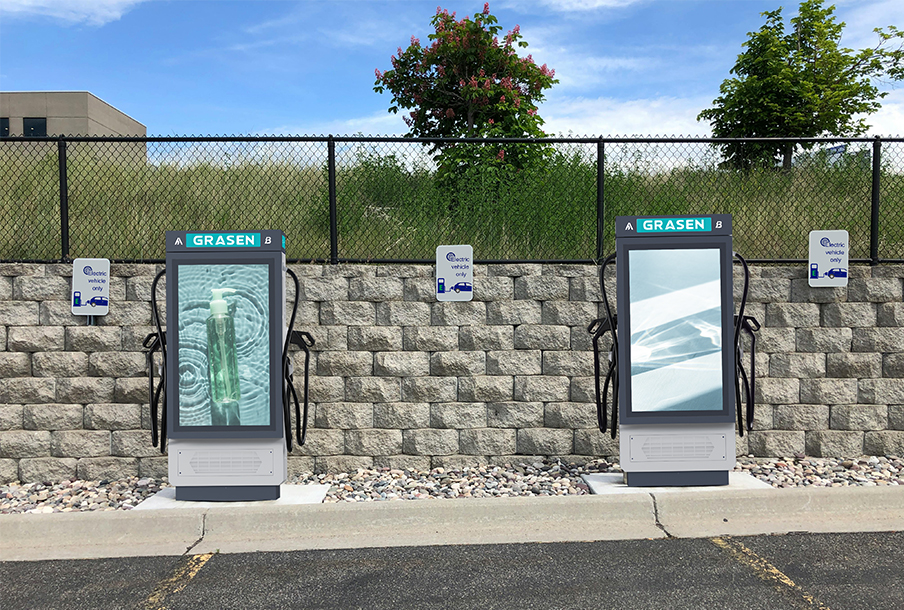



Choosing a CCS2 DC fast charger for commercial use starts with the connector, but the connector alone does not tell you whether the equipment is right for the project.
For a commercial charging site, buyers also need to consider the vehicles being served, output voltage, charging current, connector quantity, simultaneous charging demand and backend requirements.
These details matter because two chargers using the same charging interface can still behave very differently in real operation.
For fleet operators, charging network companies, distributors and EPC contractors, the better question is not simply:
“Does this charger support CCS2?”
It is:
“Does this charger configuration fit the vehicles and the way the site will actually operate?”
Why Does CCS2 Matter for Commercial Charging?
The connector standard is one of the first filters in charger selection because the vehicle must be able to physically connect to the station.
For projects targeting CCS2-based markets, the charger therefore needs the correct interface configuration. Grasen’s official product documentation for its European-standard DC fast charger platform includes CCS2 charging connectors.
But connector compatibility only answers the first question.
A buyer still needs to know:
Can the charger work within the voltage range of the vehicles?
How much current can the charging gun provide?
Will one or two vehicles use the charger?
How is power handled when both connectors are active?
Does the project require backend or payment integration?
These questions often determine whether the equipment will work well after installation.
Connector Compatibility Is Only the First Step
A matching connector does not guarantee the same charging performance for every vehicle.
Actual DC charging performance can also depend on battery voltage, the vehicle’s maximum charging capability, state of charge, battery temperature and charging curve.
That means two vehicles can connect to the same charger and still charge at very different rates.
One vehicle may be able to accept a relatively high power level, while another may request much less because of its battery platform or current state of charge.
The charger has to work within its own technical limits while also responding to what the vehicle can accept.
So when evaluating commercial charging equipment, it is better to look beyond the connector name and review the complete charging window.
Why Does DC Output Voltage Matter?
Output voltage is an important part of vehicle compatibility, especially when a station is expected to serve different EV models.
For Grasen’s referenced 40–160 kW DC charger platform, the official specification includes a 200–1000 V DC output range.
A wider voltage range gives the charger more flexibility when working with vehicles built on different battery voltage platforms.
However, voltage range should not be confused with guaranteed charging power.
Even if the charger is technically capable of delivering a high output, the vehicle still controls how much current and power it can accept during the charging session.
This is particularly relevant for fleet projects.
If the station will mainly serve a known group of buses, vans, taxis or passenger cars, it makes sense to provide those vehicle details before the equipment configuration is finalized.
The connector gets the vehicle connected.
The voltage and current specifications help determine what happens after that.
Single or Dual Connectors?
Another important decision is whether the site needs one or two charging connectors on the same cabinet.
A single-connector charger serves one charging session at a time.
A dual-connector configuration can allow two vehicles to access the same charger cabinet, which may be useful where charging sessions often overlap.
Grasen’s official technical documentation states that the referenced platform supports single-connector fast charging and simultaneous charging through two connectors with equal power allocation.
For buyers, the key point is that “dual connector” does not automatically mean that both vehicles receive the charger’s full rated power at the same time.
For example, if a charger is rated at 120 kW, the available power may need to be shared between the two active charging sessions.
So before ordering, ask:
How does the charger distribute power when both connectors are in use?
This can affect charging time, parking-bay utilization and vehicle turnover.
How Much Charging Power Does the Project Need?
Power still matters, but it does not need to dominate the equipment-selection process.
A 120 kW charger may be suitable for one project, while another site may require 160 kW, 240 kW or more.
The important point is that a higher-rated charger does not automatically mean every vehicle will charge faster.
If the vehicle cannot accept the additional power, the extra charger capacity may not create much practical benefit.
The same applies to the site itself. Available electrical capacity and expected vehicle demand should be considered before choosing the charger rating.
For this reason, power selection should begin with the vehicles and the operating pattern of the site rather than simply choosing the highest number on the specification sheet.
What Does a Commercial Charger Need Beyond the Connector?
A commercial charger usually needs to do more than deliver DC power.
Depending on the project, operators may also need user authentication, session control, network connectivity and backend communication.
For the referenced Grasen platform, the official product documentation includes RFID and QR-code charging, mobile-app operation and SIM/4G network connectivity.
Different sites may need different functions.
A private fleet may focus on driver access and operational monitoring.
A public station may require a different user flow, payment method or backend connection.
A distributor may already have a charging management platform that the equipment needs to work with.
These requirements are easier to confirm before production than after the charger has arrived on site.
If a project requires a specific OCPP version, CSMS platform or payment interface, the exact integration requirement should be confirmed with the supplier rather than assumed from a general product description.
What Should You Confirm With the Supplier?
A request such as “I need a 120 kW charger” is usually not enough to define the final equipment configuration.
Before ordering, several points are worth confirming.
First, check the connector configuration.
Will the site use one connector or two? If two charging guns are required, how is the available power divided when both are active?
Second, confirm the output voltage range.
This becomes more important when the station is expected to serve vehicles using different battery platforms.
Third, check the maximum output current per connector.
A charger’s rated kW figure alone does not describe the full capability of the charging interface.
Fourth, ask how simultaneous charging works.
For dual-connector equipment, power-allocation behavior can affect how quickly each vehicle charges and how efficiently the two parking spaces are used.
Fifth, confirm communication requirements.
If the project already uses a backend platform, payment system or CSMS, the integration details should be reviewed before shipment.
Finally, check what technical and compliance documentation is available for the destination market.
For an international B2B project, these details can be just as important as the rated power.
What Site Information Is Worth Providing?
You do not need to complete the full installation design before requesting a charger quotation.
A few basic project details are usually enough to make the technical discussion much more useful.
These include the available input power, number of charging bays, expected vehicle types, required charger power, connector quantity and expected simultaneous charging demand.
For the referenced Grasen platform, the official electrical specification includes a 400 V ±15%, TN-S three-phase five-wire input system.
Final cable sizing, protection devices and local electrical work still need to be confirmed according to the actual site and local regulations.
The purpose of providing site information early is not to complete the installation plan.
It is to make sure the equipment being ordered is suitable for the project before production begins.
How Can Grasen Support Your Charging Project?
Two customers may both ask for a CCS2 DC fast charger and still need very different equipment.
One project may require a single charging connector for a dedicated fleet vehicle.
Another may need two charging positions sharing one cabinet.
A third may already have a backend system that the charger needs to communicate with.
For this reason, Grasen can review the project around the actual requirements before the final configuration is confirmed.
Useful information includes the target market, expected vehicle types, charger power, number of connectors, available site power and software requirements.
The aim is not to select a charger by connector type alone.
It is to match the hardware and operating functions to the way the charging site will actually be used.
Is a CCS2 DC Fast Charger Right for Your Project?
A CCS2 DC fast charger can be a suitable choice when the target vehicles and market require this charging interface.
But the connector should be treated as the starting point rather than the complete specification.
Before moving to a final quotation, it helps to know:
Which vehicles will use the charger?
What voltage range do they require?
How much charging power do they realistically need?
Will one or two vehicles charge at the same time?
What current is required from each connector?
Does the station need to connect to a specific backend or payment system?
Once those questions are answered, the equipment configuration becomes much easier to define.
The goal is not simply to buy a charger with the correct connector.
It is to choose a charging system that fits the vehicles and the real operating conditions of the site.
Get a Charger Recommendation
Planning a commercial charging project?
Send Grasen the information you already have, such as your target country, vehicle type, required power, number of charging points, available site power, connector quantity and backend requirements.
You do not need to have every technical detail ready before getting in touch.
With the basic project information, the Grasen team can begin narrowing down a suitable charger configuration.
Email: [email protected]
Website: www.grasen.com
Send us your project requirements and we can help match the charging configuration to your vehicles, site and operating needs.