


Introduction
In southern Chile, winter can completely change the conditions around a bus charging site. Heavy snow may cover the parking area and vehicles, but the tourist buses still have routes to run and schedules to keep.
That was the practical challenge behind this Grasen project. The chargers still had to be ready for daily use even when snow, low temperatures and outdoor exposure became part of the normal working environment. Vehicle performance, charging time, outdoor conditions and equipment protection all had to be considered together.
That makes this project a practical example of EV charging in cold weather. It also helps answer a common question: does cold weather affect EV charging? In this case, the answer involves both the vehicle and the charging site.

What Did This Tourist Bus Fleet Need from Its Charging Site?
The buses could not charge whenever they wanted. They came back to the depot on a schedule, and there was only so much time available before they had to go out again. For this tourist bus fleet, charging had to fit around daily routes, passenger service and return times.
In normal weather, the depot was arranged around multiple charging positions, allowing buses to return, connect and prepare for the next day’s service. Winter changed the situation quickly. Snow could build up around the depot and temperatures could fall, while the buses were still expected to follow their normal service plan.
When the buses came back, the depot still had to work as a charging site. They needed a place to connect, enough time to charge, and a clear path back into service.
Does Cold Weather Affect EV Charging?
Put two buses on the same charger on a cold morning and the result may still be quite different. One may have just finished a route, while the other has spent several hours outside in the cold.
The bus that has been sitting outside for several hours may start off much more slowly. That difference can come from the battery temperature rather than from anything wrong with the charger.
The vehicle decides what it can take at that point in the session. When the battery is still very cold, that number may stay low for a while. After some time on charge, it can begin to climb as the battery condition changes.
So when charging an EV in cold weather looks slower than expected, the charger itself is not always the cause. Battery temperature and the vehicle’s actual power request are often worth checking first.
What Happens to Electric Vehicle Range in Winter?
A bus can finish the same route with a noticeably different state of charge once winter sets in. The route itself has not changed, but the bus may use more energy to complete it. Heating the cabin takes energy, and the battery may need warming too. Snow and wet roads can increase energy use as well.
This is why electric vehicle range in winter is not always as consistent as it is in milder weather.
People often ask, do electric cars lose charge in cold weather? For a bus operator, the more immediate concern is what is left when the vehicle gets back. Less remaining charge can mean a longer stop at the depot before the next trip.
Winter Is Also a Charging Site Problem
Winter does not only affect the vehicle. It can change the whole charging area as well.
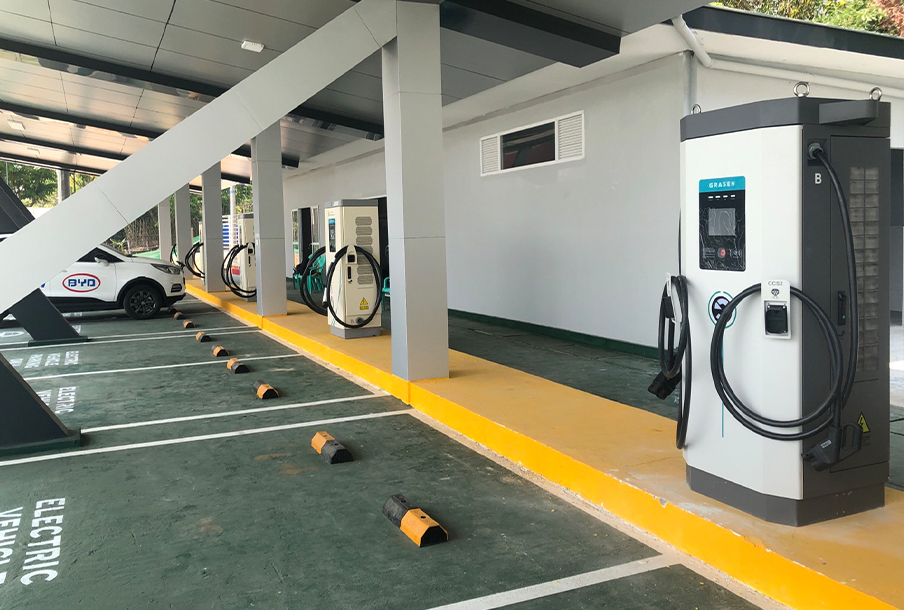
At this Chile site, the difference between normal weather and heavy snow is easy to see. After a heavy snowfall, the depot looks like a different place. Snow collects beside the buses and around the charging positions. Once temperatures rise, staff may also have to deal with wet ground and melting snow. Low temperatures can also make cable handling more difficult during daily operation.
For anyone planning a cold weather EV charging station, these everyday site conditions need to be considered from the beginning. The vehicle has one set of winter problems. The charging site has another.
That is why cold climate projects need to consider not only charging power, but also how the equipment will be used outdoors through the entire winter.

How Grasen Adapted the Charging Solution for Southern Chile
The Chile project was not treated as a standard equipment delivery. Before the chargers were shipped, Grasen added an extra thermal insulation layer to give the equipment more protection in the local low temperature environment.
This adjustment came from the way the site would actually be used. The chargers would remain outdoors, and heavy snow and cold weather were part of normal winter operation rather than an occasional event. The tourist buses also needed to return to service every day, so the charging equipment had to be prepared for those conditions from the start.
The insulation treatment was decided before shipment, based on the conditions the chargers were expected to face after installation. In this electric bus charging solution, the local climate shaped the final equipment setup from the start.
That lesson is useful beyond this one site. In other cold climate EV charging projects, equipment that performs well in a mild region may need a different level of protection once it is expected to stay outdoors through long periods of low temperature.
For fleet EV charging, the charger was only one part of the project. The final setup had to make sense for this depot, the local winter conditions, and the way the buses actually moved through their daily schedule.

How the Charging Site Fits into Daily Bus Operations
Several buses can arrive back at the depot within a relatively short period. When that happens, staff need to see which charging points are available and decide where the next bus should connect.
The equipment also has to fit into the normal rhythm of the depot. Staff are handling cables, checking charger status and arranging maintenance while buses continue moving in and out of the site.
For this fleet, charger availability is directly connected to vehicle availability. If charging is delayed, the next trip can be affected too.

What Can Other Cold Climate Fleet Operators Learn from This Project?
The Chile project made one thing very clear. Looking at charger power alone would not have told us enough about what the site actually needed.
The buses did not all follow exactly the same schedule. Some came back earlier, some later, and the amount of time available for charging was not always the same. Winter made those differences more noticeable when several vehicles needed to use the depot around the same time.
The project also showed why the site itself has to be part of the planning. That mattered because the chargers were going to stay outside through every season, including the coldest part of winter. Before the final setup was confirmed, we had to think about snow, low temperatures and what years of outdoor exposure could mean for the equipment.
The technical choices came after that. Power level, connector type, extra protection and backend requirements could then be matched to the way the buses actually used the depot.
The useful takeaway is simple. Start with the buses and the place they operate. The charger specification makes more sense after that.
What This Chile Project Tells Us About EV Charging in Cold Weather
The snow covered buses in these photos tell the story better than any technical summary. Winter changes the vehicle, the charging site and the daily routine at the same time.
This Chile project shows why EV charging in cold weather has to be considered as part of the whole fleet operation. In winter, the bus, the charger and the depot cannot really be looked at separately. A change on one side can affect how the rest of the operation runs.
For a fleet operator, the real question is simple: are the buses ready when they need to leave?
Working on a Cold Region Fleet Charging Project?
Planning a fleet charging site in a cold region? Send us the vehicle and site details. We can review the project conditions with you before the charger configuration is decided.
Email: [email protected]
Website: www.grasen.com
WhatsApp: +86 199 3989 0561