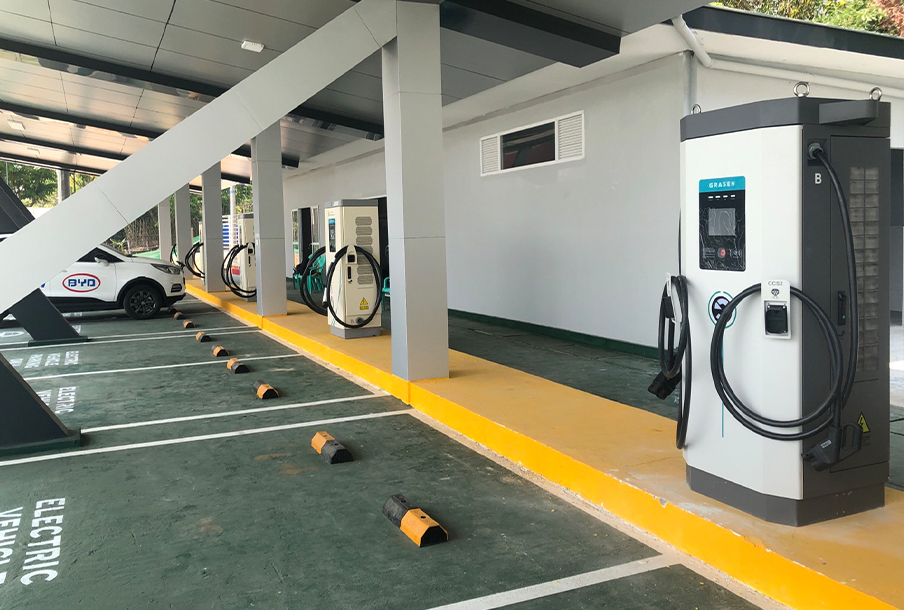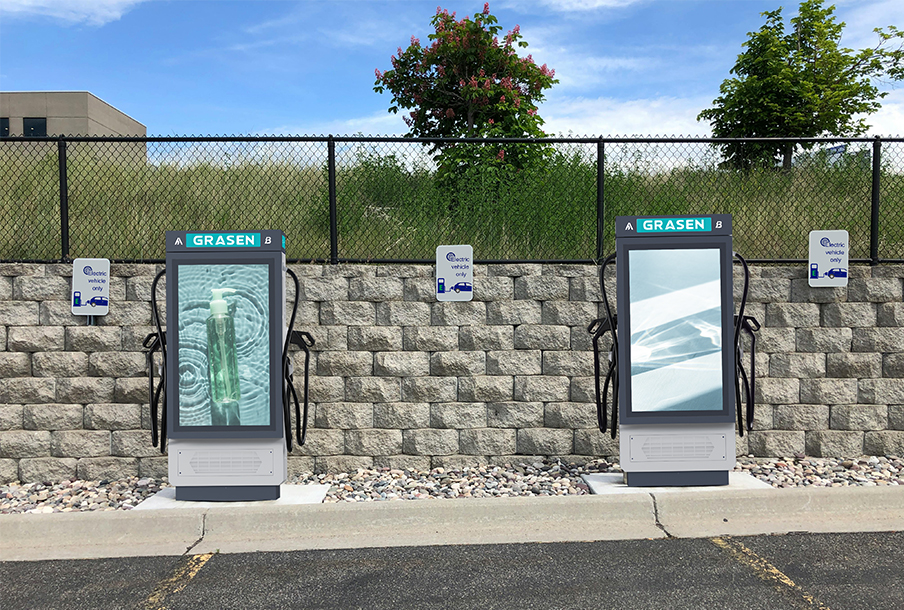



A single charger is easy to keep an eye on. Staff can usually see whether it is working, and a problem at one location is relatively easy to investigate.
The picture changes as more chargers are added. Once equipment is spread across several sites, the operator has to keep track of charging activity, equipment status, energy use, customer accounts and faults without being physically present at every charger.
That is the practical role of EV charging management software.
It may also be described as an EV charging management system, CSMS or EV charging management platform. Whatever name is used, the purpose is broadly the same: give the people operating the network one place to manage information coming from multiple chargers.
For a CPO, fleet operator, distributor or commercial property owner, this backend becomes increasingly useful as the charging network expands.
What Happens Behind EV Charging Management Software?
In day-to-day operation, EV charging software sits between the charging hardware and the team responsible for running it.
A simplified view is:
EV Chargers → OCPP → CSMS → Operator
The charger is still responsible for the charging session itself. The backend deals with the information generated around that session.
Charger availability, active sessions, alarms, transaction data and operating status can be brought into the same interface. Instead of treating every unit as an isolated device, the operator gets a network-level view.
The Grasen Charging Station Management System follows this centralized approach. Its documented modules include real-time monitoring, user management, financial management, asset management, maintenance and system administration.
You will also see different names used for this kind of software. One provider may call it EV charging management software, another an EV charging management system or EV charging management platform, while some pages use terms such as EV charging stations software. In practice, these phrases often describe closely related backend tools for managing charging networks.
When Does a Charging Network Need a CSMS?
There is no fixed charger count at which a CSMS suddenly becomes necessary.
For a small installation, local checks may still work perfectly well. If an office has two chargers outside the building, staff can often see when something is wrong and deal with it directly.
That approach becomes less practical once the same operator has chargers in several car parks, fleet depots or public charging locations.
Imagine operating 50 charging points.
A manager may want to know:
· Which chargers are available right now?
· Which connectors are currently charging?
· Has an alarm appeared at one location?
· How much power is being delivered?
· Which users have been charging?
· How much revenue did a station generate?
· Can a charger be restarted without sending a technician?
That information is much easier to handle through one EV charging management platform than through separate pieces of equipment.
Grasen's documented CSMS can display charging information such as vehicle SOC, charging time, energy, voltage and current. Its station-monitoring functions also include supported remote operations such as starting or stopping charging, rebooting equipment and unlocking a connector.
As the number of chargers increases, centralized visibility becomes less of a convenience and more of an operating requirement.
What Can an EV Charging Management System Actually Manage?
A modern EV charging management system usually covers much more than charger status.
Depending on the platform, operators may be able to monitor chargers and active sessions, manage users and RFID cards, configure charging prices, review charging and revenue records, organize stations and assets, and handle maintenance tasks from the same backend.
The Grasen CSMS provides a practical example. Its documented functions include RFID and user management, user groups, fleet vehicle management, flexible charging tariffs, recharge and charging records, station and charger management, reservations, remote diagnosis and firmware updates. The system also includes smart load-balancing functionality for charging stations with limited capacity and supports mobile-app or RFID-based payment workflows, with API interfaces available for integration with payment service providers in different regions.
Financial and operating data are also part of the platform. Operators can review cumulative charging energy, charging sessions and income, analyze charging data by location or station, check utilization and configure time-based electricity and service-fee pricing.
Maintenance does not always have to begin with a site visit either. The documented system includes diagnostic functions for obtaining charging and controller logs, as well as support for firmware upgrades and viewing upgrade progress.
Want to see the platform in more detail? The Grasen CSMS Guide provides a closer look at the management interface and system functions.
Download the Grasen CSMS Guide (PDF)
The value of EV charging software is not tied to one individual feature. Its real purpose is to bring routine charging-network operations into one management environment.
Why Does OCPP Matter for EV Charging Management Software?
A charger and a management platform need a common way to exchange information.
This is where OCPP becomes important.
OCPP, or Open Charge Point Protocol, is widely used for communication between compatible EV chargers and charging management systems.
For charging operators and project developers, this can make a network less dependent on a closed combination of one charger and one backend. It can also make future expansion easier when additional compatible equipment is introduced.
The current Grasen CSMS documentation states that the platform supports charging points with OCPP 1.6J capability. The same document describes later OCPP support as a future development direction, so the required protocol version should always be confirmed against the current software release before deployment.
When evaluating an EV charging management system, buyers should therefore ask two separate questions:
Does the charger support the protocol I need?
and
Can the management platform work with the chargers I plan to deploy?
This is worth checking before hardware is ordered. A compatibility issue is relatively easy to solve during project planning; it becomes far more inconvenient after chargers have already been installed across several locations.
What Should You Check Before Choosing EV Charging Management Software?
Different charging projects put different demands on the backend.
A workplace running four chargers may only need straightforward monitoring and user control. A CPO managing several public stations may need much more detailed control over pricing, payments, charger status, maintenance and operating data.
A useful evaluation should look at several areas together.
OCPP compatibility matters when interoperability and future expansion are priorities.
Real-time visibility matters when operators need to see charger, connector and charging-session status without visiting the site.
User and payment management becomes more important for public and commercial charging.
Pricing and revenue data are useful when the network operates as a paid charging service.
Remote maintenance can reduce unnecessary site visits by allowing operators to investigate faults, obtain logs or update supported equipment remotely.
And finally, scalability matters. Software that works well for five chargers should still be practical when the network grows much larger.
The right choice is not necessarily the platform with the longest feature list. It is the one that fits how the charging network will actually be operated.
From One Charger to a Charging Network
A charger delivers electricity.
A charging network has to manage much more: equipment, users, payments, pricing, maintenance and operating data.
That is where EV charging management software becomes useful.
For a small installation, the backend may remain mostly in the background. In a larger commercial network, it can become one of the main tools the operating team uses every day.
Grasen combines EV charging hardware with a charging station management system for commercial charging projects. The documented platform supports centralized charger monitoring, user and financial management, asset management and remote maintenance functions.
If you are planning a charging network, send us your charger quantity, target market, OCPP requirements, payment needs and operating model. Our team can review the charging hardware and management requirements together.
Download the Grasen CSMS Guide (PDF)
Email: [email protected]
Website: www.grasen.com
WhatsApp: +86 199 3989 0561