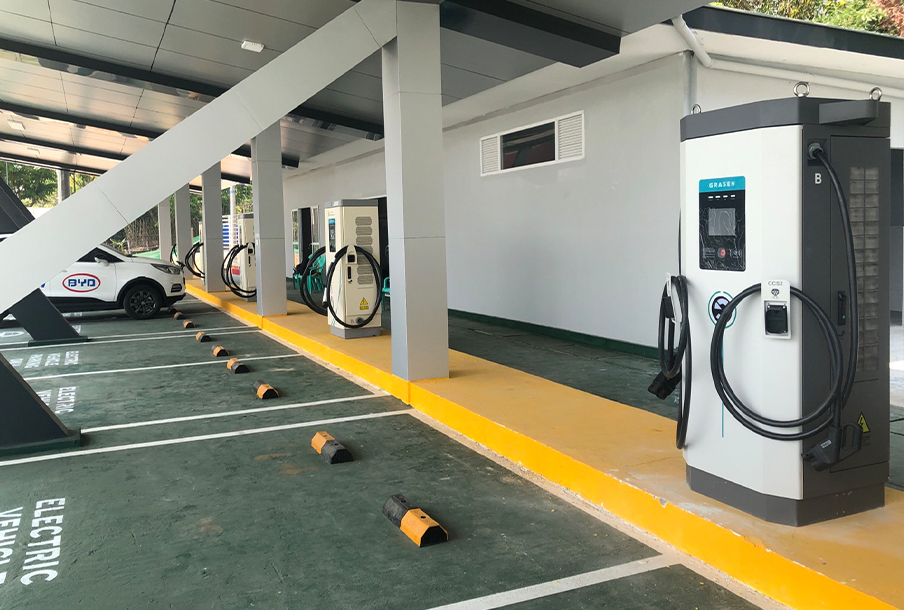



Installing EV chargers is no longer only about providing a charging service. For commercial property owners, charging operators, fleets and parking businesses, EV charging can also become part of a broader revenue strategy.
Charging fees are the most obvious source of EV charging station revenue, but they are only one part of the picture. EV charging monetization can also involve smart pricing, advertising, memberships, fleet accounts and additional spending at nearby businesses.
For anyone looking at how to monetize EV charging stations, the right approach depends on the site itself: traffic, electricity cost, user behavior, charger utilization and the way the charging service is operated. Below are six practical EV charging monetization tools that commercial sites can consider.
1. Charging Fees: The Most Direct Revenue Source
For most commercial sites, charging drivers is the clearest starting point for generating EV charging station revenue.
Common pricing models include:
· charging by kWh;
· charging by time;
· a fixed session fee;
· or a combination of energy and service fees.
For public charging stations, commercial parking areas and destination charging sites, this is usually the first revenue stream to consider.
Pricing, however, needs to reflect more than electricity cost alone. Nearby competition, how long vehicles stay and how frequently the charger is used can all influence the final tariff.
Charging more per session may improve margin, but only if drivers continue to use the site. If a higher price sends users to another station, utilization can fall and the expected revenue gain may disappear.
For DC fast-charging operators, the same principle applies. If you ask how do DC fast charging stations make money, the answer usually starts with charging fees, but the result still depends on utilization, electricity cost, uptime and pricing.
This is why many commercial charging businesses combine charging fees with other monetization methods.
2. Smart Pricing and Idle Fees
A charger does not need to use the same tariff throughout the day.
With the right charging management software, operators can adjust pricing according to demand, electricity costs or how charging bays are being used.
Peak pricing may make sense during busy periods or when electricity costs are higher. Off-peak pricing can encourage drivers to charge when the station is quieter.
EV charging idle fees can also be applied when a vehicle remains connected after charging has finished. At busy sites, this can help free a bay for the next driver instead of allowing a fully charged vehicle to block the space.
From a business point of view, idle fees can add a small source of income while also improving charger turnover. Different tariffs may also be created for public users, members or fleet customers.
That flexibility makes smart pricing one of the more useful EV charging monetization tools for commercial operators.
3. Advertising Can Create a Second Revenue Stream
Charging stations have something many other pieces of infrastructure do not: dwell time.
Drivers may stay near the charger while their vehicle is charging, which creates an opportunity for digital advertising.
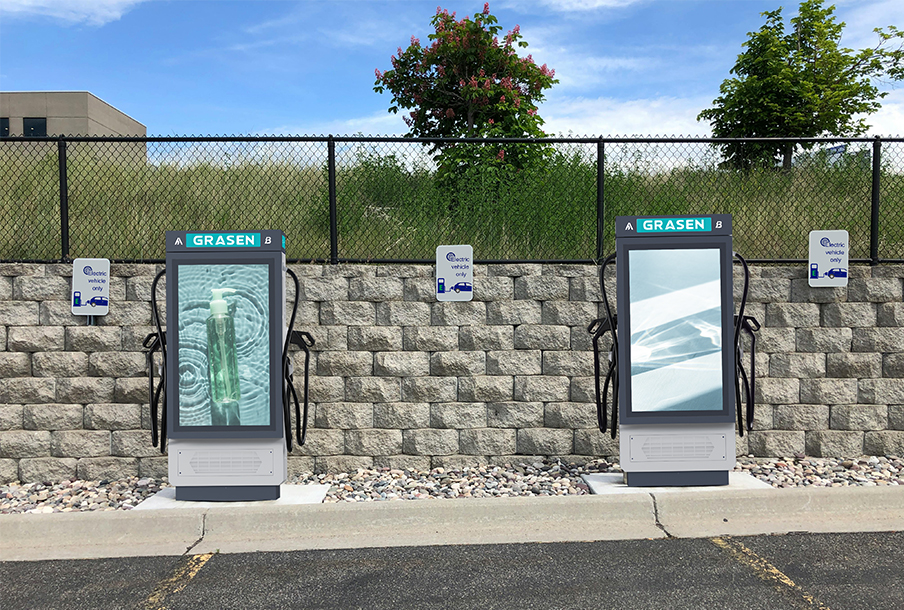
A charger with a large display can show brand advertising, shopping-center promotions, restaurant offers, local services, event information or other commercial content.
This allows one location to support two functions:
EV charging + digital advertising
For example, Grasen's S240 advertising EV charger combines DC fast charging with a 55-inch advertising screen, allowing site operators to provide charging services while also using the charger as a digital media display.
At the right location, this can create EV charger advertising revenue in addition to charging income. Shopping malls, highway service areas and other high-traffic sites are obvious examples because the screen can receive repeated exposure throughout the day.
The amount of advertising income will depend on the audience, location and commercial model, so it should be treated as an additional revenue stream rather than a guaranteed return.
For operators considering advertising as part of EV charging monetization, screen hardware, content management and backend connectivity should be planned during the project design stage rather than added later.
4. EV Charging Can Increase Retail and Property Revenue
Not all commercial EV charging revenue appears directly on the charging invoice.
In many cases, the charging session creates value somewhere else on the property.
At a shopping mall, a driver may use the charging time to visit stores or restaurants. Hotels can offer charging as an added convenience for guests travelling by EV. Supermarkets and restaurants may also benefit when charging gives drivers another reason to choose their location.
In these cases, the charger supports revenue indirectly through longer dwell time, more store visits, higher customer spending or stronger customer retention.
This is why the answer to how to monetize EV charging stations can differ so much from one property to another. A highway charging hub and a hotel parking lot may use completely different revenue models.
A charger at a retail or hospitality site may still create value even when the direct charging margin is modest, because the business can benefit from spending elsewhere on the property.
For anyone thinking about how to make money from EV charging stations, the surrounding business model can matter just as much as the charging equipment itself.
5. Memberships and Fleet Accounts Can Create Repeat Business
Public charging revenue is often transaction-based: a driver arrives, charges and leaves.
Membership models can create a more consistent relationship with users.
Charging operators may offer monthly memberships, discounted charging rates, prepaid balances, fleet accounts, loyalty programs or special tariffs.
Fleet charging creates another opportunity. Taxi fleets, delivery companies, logistics operators and corporate vehicle fleets may use the same charging site repeatedly.
Rather than treating every session as a separate transaction, operators can manage usage through fleet accounts or centralized billing.
This can make EV charging station revenue more predictable and also make charging demand easier to understand and forecast.
Memberships and fleet accounts can therefore become part of a broader EV charging business model, particularly where the site has repeat users instead of relying entirely on passing traffic.
6. Software Makes EV Charging Monetization Work
Most of the revenue models above depend on more than the charger itself.
The hardware delivers energy, but software manages much of the business around it.
A commercial charging platform may need to handle charger monitoring, user accounts, charging tariffs, payment, charging records, remote operation, fault monitoring and usage data.
OCPP connectivity can also allow chargers to work with compatible charging management systems.
This is why EV charging monetization should be considered when the charging system is being designed, not only after installation.
If an operator plans to use multiple tariffs, mobile payments, memberships, EV charging idle fees or remote management, the charger and backend platform need to support those functions from the start.
For larger networks, software becomes even more important. Managing 50 chargers across several locations is very different from operating a single charger at one property.
The ability to monitor equipment remotely, review charging records and manage users can directly affect operating efficiency and, in turn, commercial EV charging revenue.
Are EV Charging Stations Profitable?
Are EV charging stations profitable? There is no single answer, because profitability depends on the site and how the equipment is used.
More EV charging monetization features do not automatically make a charging station profitable. The result still depends on several basic factors:
Charger utilization
How often is the equipment actually used?
Electricity cost
What does the operator pay for the energy being delivered?
Charging tariff
How much does the driver pay?
Site traffic
Does the location naturally attract enough EV drivers?
Equipment and installation cost
How much capital is required to build the site?
Maintenance and operation
What does it cost to keep the chargers available?
A charger with advertising, memberships and smart pricing still needs sufficient charging demand.
Before choosing a revenue model, it is worth looking closely at how the site is actually used. A fleet depot with predictable daily charging demand has very different economics from a retail car park that depends on passing traffic.
Building a Monetization-Ready Charging Site
For commercial projects, the charger should be selected around the intended EV charging business model.
If the goal is simply to provide free workplace charging, the software requirements may be relatively simple.
If the goal is to generate revenue, buyers may need to consider:
payment methods → tariff management → OCPP/CSMS → user accounts → advertising → remote monitoring
This is where different EV charging monetization tools need to work together. Charging fees may provide the base income, while smart pricing, advertising, memberships or indirect retail spending add other sources of value.
There is rarely one universal formula for EV charging monetization. The right mix depends on location, charger type, customer profile, electricity cost and operating model.
Grasen provides commercial EV charging hardware together with software and connectivity options that can support different project requirements. Advertising-screen chargers such as the S240 can also be considered for locations where charging and digital media need to work together.
Planning a commercial charging project?
Send us your target market, charger power, expected users, payment model and software requirements, and our team can help review a suitable configuration.
Email: [email protected]
Website: www.grasen.com
WhatsApp: +86 199 3989 0561