


Consider a delivery fleet with 30 electric vehicles; however, these vehicles will not all return to the delivery center simultaneously. While some of the fleet will complete their scheduled deliveries during the daytime hours of operation, other portions of the fleet will arrive later in the evening after completing their scheduled deliveries. Additionally, several vehicles in the fleet will require early morning departure from the delivery center.
What criteria will the operator use to determine whether to add additional charging stations and/or how powerful those charging stations should be?
These are common questions as you begin to plan EV fleet charging infrastructure. Unlike public charging stations, fleet charging facilities generally need to follow more predictable vehicle schedules, parking arrangements, and daily energy requirements.
Adding additional charging stations will not automatically resolve the issue. It depends on whether the charging network matches up with the real-world operation of the fleet.
A Fleet's Charging Needs Start with Its Daily Schedule
Before operators can decide which charging equipment is right for their operation, they will need to know what a vehicle does each day.
Urban delivery fleets (short-distance) may go back to their depot each night. Electric buses typically run along a set route, but service vehicles could possibly be out on the road all day visiting different customer sites.
These differences affect the required charging capacity.
Vehicle Routes, Mileage, and Parking Time
Daily mileage may be a good first step, however, it does not give you the whole story.
Two vehicles travelling the same distance may still use different amounts of energy because of their load, route, traffic conditions and weather.
Parking time is equally important.
A delivery van parked for ten hours overnight has much more time to charge than a bus that returns to service after being off-duty for only a short period.
For EV fleet transition planning, it is essential that all operators analyze together their daily energy use, vehicle arrival times, available charging time frames, and departure times.
This assessment will also help determine if all vehicles actually have to be charging at the same time.
In most instances, charging times may be coordinated with an organization's existing fleet operations rather than having each vehicle charged at the highest possible rate.
Choosing Charging Equipment That Fits the Fleet
There is no single charger configuration that suits every commercial fleet.
When considering different fleet electrification solutions, the choice of whether to use AC or DC charging is determined primarily by the energy required by the vehicle and how much time it has to charge.
When AC Charging Makes Sense
An AC charger may be useful when you have a car parked for many hours (at least most of the night).
For example, a business that operates either passenger cars or light commercial vehicles may be able to meet their daily charging needs without having to install high-powered DC charging stations at each parking spot.
In general, AC charging devices require less power at each point of charge than DC charging devices do and therefore can be a more affordable alternative for many long-term parking applications.
However, actual charging speeds also depend on the vehicle's onboard AC charger.
A car that is plugged into an AC charging station with 22kW of power available does not necessarily mean the car can take all 22kW.
Therefore, make sure to check your vehicle's specifications prior to buying a charger.
When DC Fast Charging Is Needed
DC Fast Charging becomes more applicable when there is a greater demand for energy on a day-to-day basis, the battery size of the vehicle is increased, and/or there is less time available for charging between trips.
Common examples include electric buses, large commercial trucks, and high-use delivery fleets.
A bus has arrived at the depot and there is only a short amount of time available for charging prior to its next scheduled run. Therefore, if the bus uses an AC charger, it may not receive enough energy to complete the next trip.
DC fast charging may be more suitable when the vehicle supports the required charging rate.
Split-type DC fast charging systems are another option for large charging site installations. These systems provide a combination of power cabinets and charging dispensers which allows for an alternative layout of the system and could provide a better fit for a larger number of charging positions.
The selection of the device must take into account what is required for the site's operations, not just the maximum amount of power it can provide.
The Charging Site Matters as Much as the Chargers
Selecting the correct charger is just one aspect of creating EV fleet charging infrastructure.
The site must provide support for vehicle movement, electrical installations, daily charging operations, and ongoing maintenance.
Electrical Capacity and Site Layout
The amount of space available in a depot could accommodate up to 20 charging stations; however, the electrical system of that depot may not provide sufficient power to operate each of those charging stations at their full rated capacity.
Prior to installing a system, operators must determine what power is available at the site and how much electrical load already exists.
EV charging load management might allow for coordination of charging demands when multiple chargers use a common source with limited capacity. However, the necessary functionality and equipment compatibility must be verified at the time of system design.
Physical layout deserves equal attention.
Large buses and trucks need much more space for parking and turning compared to smaller passenger vehicles. The position of the chargers, the distance that the cables can extend, pedestrian safety, and how vehicles enter and exit the parking lot will greatly impact daily operations.
Drivers may have to move around parked cars if charging equipment is poorly placed, or they may find it harder to use some of the charging stations.
These practical details should be considered before construction begins.
A Real Bus Fleet Charging Project: Qinglongxia Charging Station
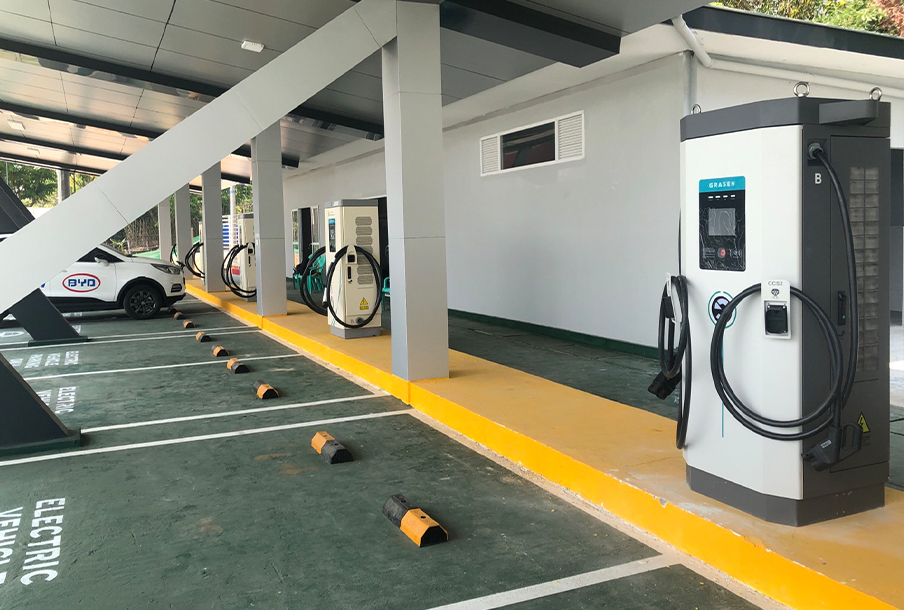
At China's Qinglongxia Charging Station, Grasen supplied charging equipment as well as an integrated charging solution to a facility that is primarily used by bus fleets.
The project includes 10 charging terminals that provide multiple charging positions at the station. 16-EV Fleet Charging Infrastruc…
Bus fleet charging has its own specific needs. The vehicles are much larger than other types of vehicles, the arrangement of parking spaces for those vehicles is an important factor to consider when planning for the charging of the vehicles, and how often the vehicles will be charged needs to take into account the daily route that each vehicle takes.
The Qinglongxia Project is an actual example of how electric vehicle (EV) charging stations have been installed to support a fleet-based operation.
Projects like this illustrate that how vehicles are used, where the chargers are located, and when they operate cannot be separated from each other when planning the charging infrastructure.
Companies that wish to build other similar types of facilities will find that these same factors play a major role in determining which commercial EV charging solutions are best for their needs.
What Happens When the Fleet Grows?
A charging system which accommodates fifteen cars now might not be able to accommodate forty cars later on.
Therefore, scalability should be considered from the beginning when planning EV fleet charging infrastructure.
Planning for Expansion Without Rebuilding Everything
Expanding a charging site is not always as simple as adding another charger.
The installation of additional electric vehicle charging stations may necessitate the use of more electric power, more electric power distribution equipment, more electric power cables, and/or changes to the existing parking configuration.
When thinking about the design of a site, operators need to determine if there will be enough space and equipment capabilities to allow for growth and expansion of new devices.
For example, if you reserve space for installation of your new system and plan for the placement of cables at the time of building construction, this may minimize disruption when your company adds more vehicles to its fleet.
Depending on the design of the system, a split-type charging architecture or modular architecture may offer an alternative configuration option.
The ideal type of EV charging infrastructure for large fleets is not necessarily the system that has the largest number of charging stations at the beginning. It is instead the configuration that can meet future needs while minimizing the impact of modifications required throughout the entire facility.
Before Finalising an EV Fleet Charging Project
Many fleet charging projects start with a discussion about how much power the chargers have, how many there are, and what they will cost.
Although each of those factors is important, they must come after we fully understand how the vehicles will operate.
How much electricity will a car need before it goes on its next trip? How long can the car be parked for? Will the current electrical system allow for the installation of the proposed charging stations?
In addition to that, if the fleet grows, will the facility be able to adapt to include more vehicles?
These questions will help operators evaluate different charging configurations based upon what they need, rather than just their specifications.
For Grasen, a manufacturer and solution provider, understanding these requirements is essential when recommending suitable charging equipment and solutions.
Well-planned EV fleet charging infrastructure will be integrated into the everyday operational needs of a fleet and won't create additional problems for drivers or operators.
The objective is not merely to provide enough charging stations to meet current vehicle needs. The goal is to develop a charging infrastructure that will continue to meet the changing demands of the vehicle fleet.