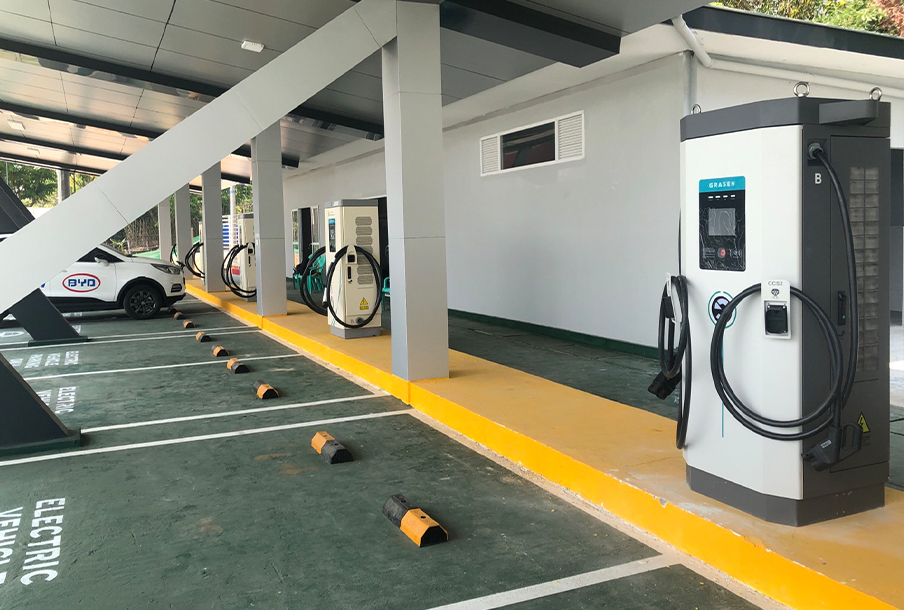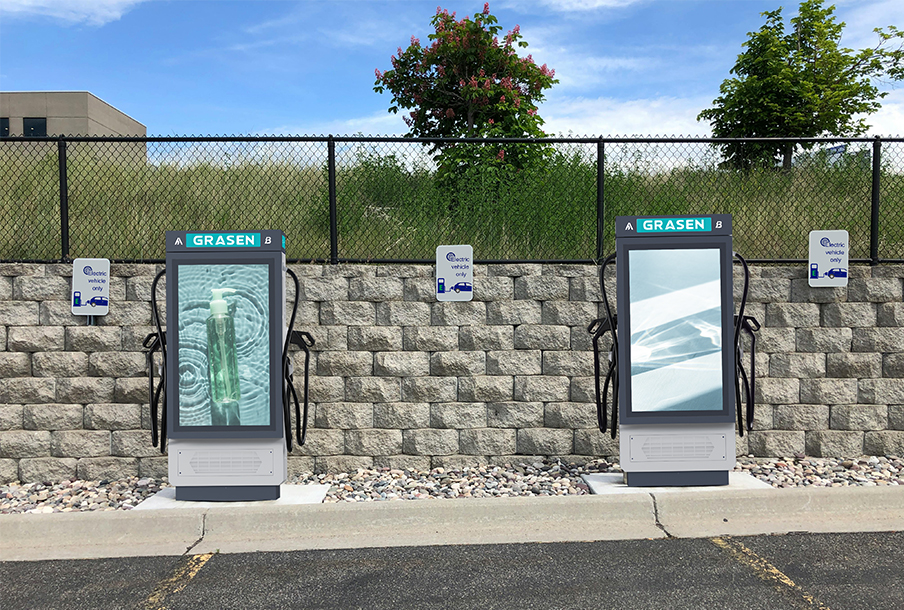



The charger itself is usually the easy part of a home EV charging project. Working out the installation cost is often less predictable.
A charger might sit on a garage wall only a few meters from the electrical panel. At another home, the same charger could be installed outside at the end of a driveway. The equipment may be identical, but the amount of cable, labor and electrical work can be very different.
For budgeting purposes, it makes more sense to look at those two costs separately: what you pay for the charger and what it takes to get it working at the property.
What Does the Charger Itself Cost?
Look through most residential AC charger ranges and you will usually find the same three power ratings: 7kW, 11kW and 22kW.
Based on typical pricing levels among Chinese export manufacturers, the following figures can be used as an initial hardware reference:

The numbers in the table are for the charger hardware. What happens after the equipment leaves the factory — freight, customs duties, local taxes and installation — needs to be budgeted separately.
It can be tempting to choose the biggest kW figure available, but at home that extra capacity is not always useful.
Suppose the car's onboard charger tops out at 11kW. A 22kW wallbox will still only deliver what the vehicle can accept, so there is no charging-speed gain from the larger unit. The property can create a similar limit. If the existing electrical supply cannot comfortably handle the extra load, choosing more charger power may simply create more electrical work.
Someone plugging in after work and leaving the car overnight may find 7kW perfectly adequate. Where three-phase power is already available, 11kW can be a useful step up. Moving to 2kW is more situational: both the vehicle and the property need to be capable of using the extra power before it offers much practical value.
Power rating is not the only thing behind the price tag either. Add RFID access, Wi-Fi, app control, OCPP, metering or 4G, for example, and two chargers with the same kW rating can end up at noticeably different prices. Displays and pedestal options can add further cost.
Why Is One Home Installation More Expensive Than Another?
There is no particularly useful worldwide installation price.
An electrician in Germany, the UK, Australia or the Middle East may charge very different rates. Local electrical codes, material prices and permit requirements also vary. Even two properties in the same city may involve very different amounts of work.
One of the first things an installer will look at is where the charger is going.
If the parking space is beside the electrical panel, the cable run may be short and simple. Put the charger across a garden or driveway and the job can involve more cable, conduit, trenching and labor.
The existing electrical system matters just as much. Some homes already have enough spare capacity for EV charging. Others may need additional circuit protection, load management or electrical upgrades before a charger can be connected safely.
Mounting can change the job as well. Fixing a wallbox to an existing garage wall is usually fairly straightforward. A freestanding pedestal may need a foundation and underground cable routing.
The available power supply can narrow the choice quite quickly. In many homes, 7kW works with single-phase power. Moving to 11kW or 22kW will often mean looking for a suitable three-phase supply. It is better to check that first than to choose a charger and discover the electrical limitation afterwards.
What Should You Budget for a Home Charger?
For the charger hardware alone, around $160–$315 is a useful starting range for a standard residential AC charger sourced from a Chinese export manufacturer.
Installation is better priced locally.
An online average may look convenient, but it can easily give the wrong impression. A local electrician can normally provide a much more useful figure once they know where the charger will be mounted, how long the cable run is and what electrical supply is already available. In some cases, a photo of the electrical panel and parking area may be enough for an initial assessment.
The charger supplier will need a slightly different set of information. Vehicle model, connector standard, expected charging power and whether the unit will be wall-mounted or installed on a pedestal are usually enough to start the conversation.
From there, the specification can be narrowed down without paying for charging capacity or features that are unlikely to be used.
Price Note
The hardware prices shown above are approximate market-average estimates based on typical pricing levels among Chinese export manufacturers. They are intended for preliminary budgeting and are not fixed Grasen quotations.
Actual equipment pricing can change with power level, specification, connector standard, certification, order quantity, shipping terms and destination market.
Installation costs should be calculated separately for each project. Electrician rates, working hours, permit fees, electrical materials, cable routes, grid conditions and civil work vary between countries, cities and individual properties. A site-specific quotation is therefore needed before the final installation budget can be confirmed.